When a storm, fire, or power failure hits, most of us reach for the phone first. In a widespread emergency, many people do the same thing at the same moment, and cell networks can slow down or stop completing calls. A family emergency communication plan covers that gap. It costs close to nothing, takes one evening to set up, and works whether or not your phone does.
Why your phone may fail you right when you need it most
Cell towers handle a limited number of calls at once. After a big event, thousands of people in the same area try to reach family at the same time, and the network gets crowded. Towers can also lose power or be damaged, which leaves a whole area with no signal at all.
Your phone may be working perfectly and still not connect. That is why a plan needs to answer a few questions before anything happens:
- who do we contact,
- where do we meet, and
- what do we do if nobody answers?
A plan on paper also helps when a phone battery dies, a phone gets lost, or a child has to borrow a stranger’s phone. Everything below is built so it still works in those situations.
Pick one out-of-area contact everyone can reach
Choose one person who lives far enough away that they are unlikely to be caught in the same event, perhaps a relative or friend in another state. Local lines may be jammed while a message to or from a distant number gets through, and one person holding everyone’s news makes it easy to piece things together.
Consider asking this person ahead of time. Explain that during an emergency, each family member will check in with them, and that they can pass along who has reported in and where. Most people are glad to be asked.
A few things make this contact work well:
- They have every family member’s cell number saved.
- They know the plan exists and what a check-in message looks like.
- Everyone, including the kids, knows their name and number without needing the phone to look it up.
Write it down: a wallet card for every family member, kids included
A phone holds your contacts only as long as it has power. A card in a wallet, a school backpack, or a lunch box does not run out of battery. A plain index card cut to wallet size works fine, and a piece of clear tape over it will protect it from wear.
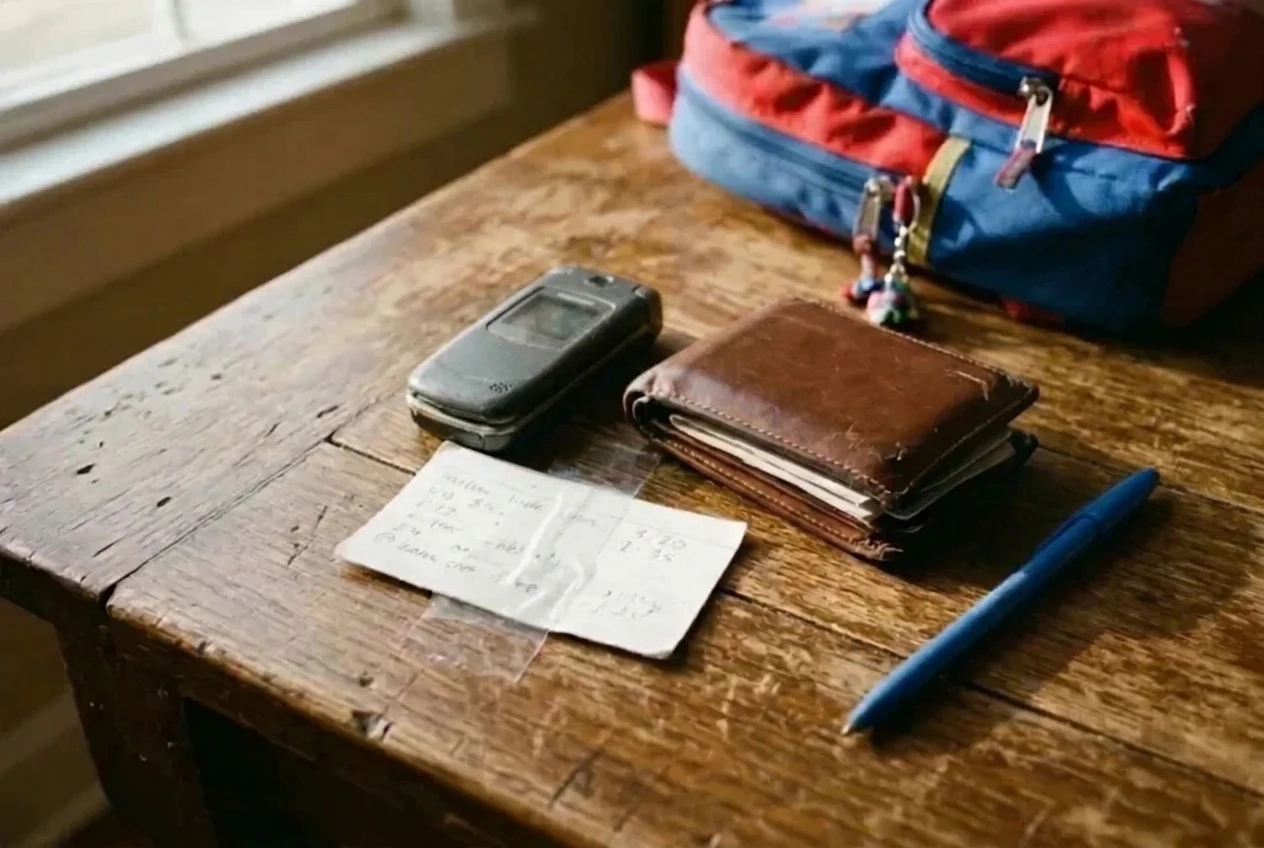
Consider writing these items on each card:
- The family member’s full name
- The out-of-area contact’s name and phone number
- A second out-of-area contact, if you have one
- Each parent’s or adult’s cell number
- Work phone numbers, if there are any
- The three meeting spots (explained below)
- Any medical needs or allergies
- A short line such as “Text first, call second”
Younger children can carry a card even if they cannot read it well. Teachers, neighbors, and other adults can read it for them. Older kids can practice reciting the main number until they know it by heart.
Choose meeting spots: next door, across the neighborhood, and out of town
Phones are only one way to find each other. A meeting spot works even if every network is down. Consider choosing three, each for a different situation.
Right outside the home. This is for a sudden problem like a fire. Pick a specific place, such as the mailbox or a particular tree, so nobody has to guess.
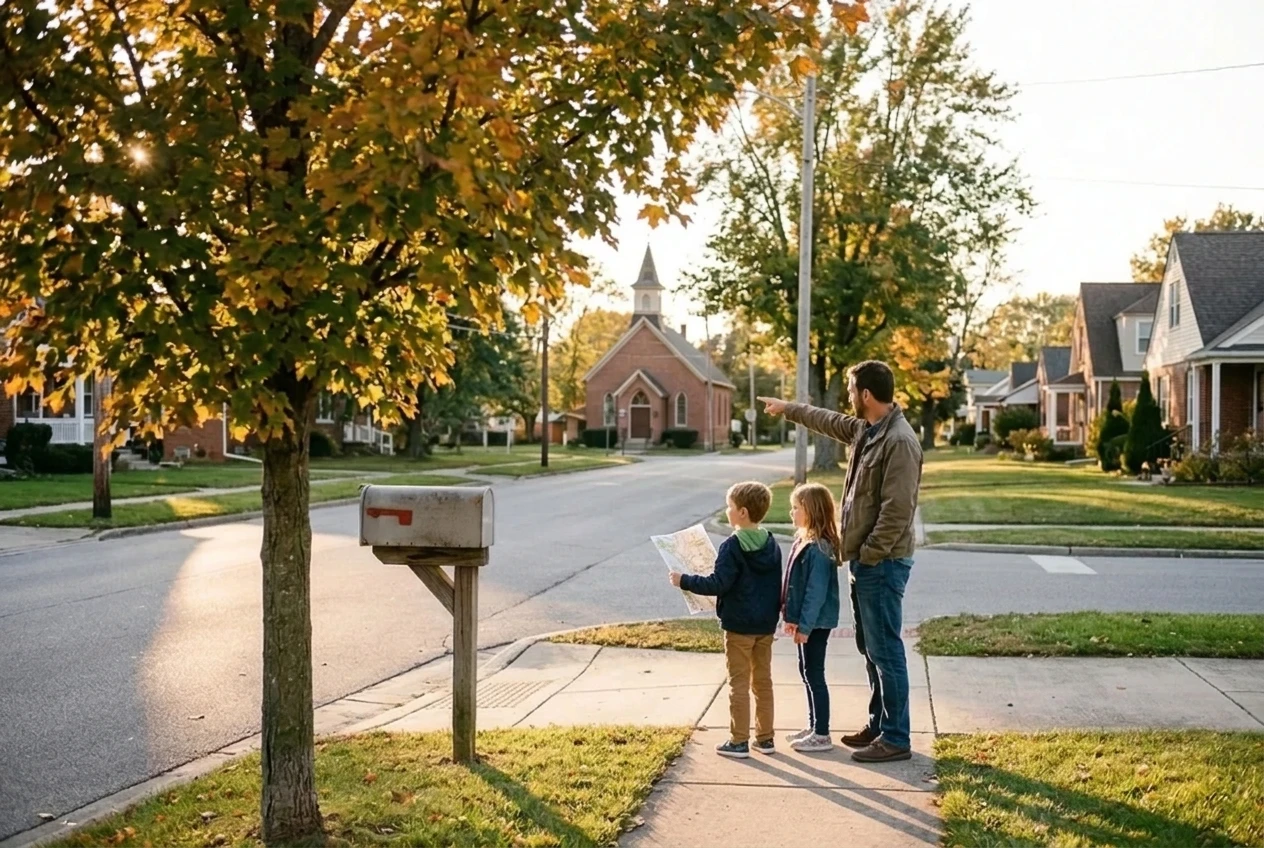
Across the neighborhood. This is for when you cannot go home, perhaps because of a gas leak, flooding on your street, or a blocked road. A neighbor’s house, a nearby church, or a library works well. Choose somewhere within walking distance that your kids already know.
Out of town. This is for a larger event that forces an evacuation. It could be a relative’s home or a town along your usual route out. Decide in advance which direction you would drive, and write down a backup route in case the first one is closed.
Visit each spot together at least once, so the names on the card mean something real to everyone.
Text first, call later: simple habits that help when networks are crowded
A text message generally needs far less network capacity than a voice call, so it often goes through when a call will not. Texts can also wait and retry on their own if the signal drops for a moment. Making texting the first habit gives your messages the best chance of arriving.
Some habits worth building:
- Keep messages short and plain: “We are safe at home. Will check in again at 6.”
- Text your out-of-area contact first, then let them pass the news along.
- Keep calls brief, so the line frees up for others.
- Consider turning down screen brightness and closing apps you do not need, to stretch battery life.
- Use a low-power mode if your phone offers one.
Agree on a check-in time as well, such as every few hours. If a message does not go through, your family knows you will try again at the next time. That lowers worry for everyone.
Plan for work hours, school pickups, and the people who are not home together
Emergencies rarely wait until the whole family is under one roof. On a weekday, the adults may be at job sites or across town, and the kids at school or with a sitter. Your plan needs to cover those hours too.
Consider walking through a few questions together:
- Who picks up the kids if one parent cannot reach the school?
- Does the school have an emergency contact list, and are your out-of-area contact and a nearby friend on it?
- Where would each adult go if they cannot get home by the usual route?
- Does your employer have an emergency procedure, and do you know where it is posted?
- Who checks on an elderly relative or neighbor who lives alone?
Write the answers on a single sheet and keep a copy at home. Ask the school or daycare how they handle emergencies, since many have a written policy that will shape your plan. It also helps to name one trusted adult nearby who can take your child in if you are delayed, and to tell that adult they are on the list.
Low-cost backups worth considering: a battery bank, a hand-crank radio, and paper maps
The plan comes first, and gear is optional. If you would like a few inexpensive backups, these three are practical and fit a tight budget.
A battery bank. A charged power bank can refill a phone a few times. Keep it charged, and keep the matching charging cable with it. It is worth checking the charge every few months, since batteries drain slowly even when unused.
A hand-crank or battery radio. A radio lets you hear official updates when cell service and internet are down. Consider one that receives the weather band, and make sure you know how to tune it before you need it.
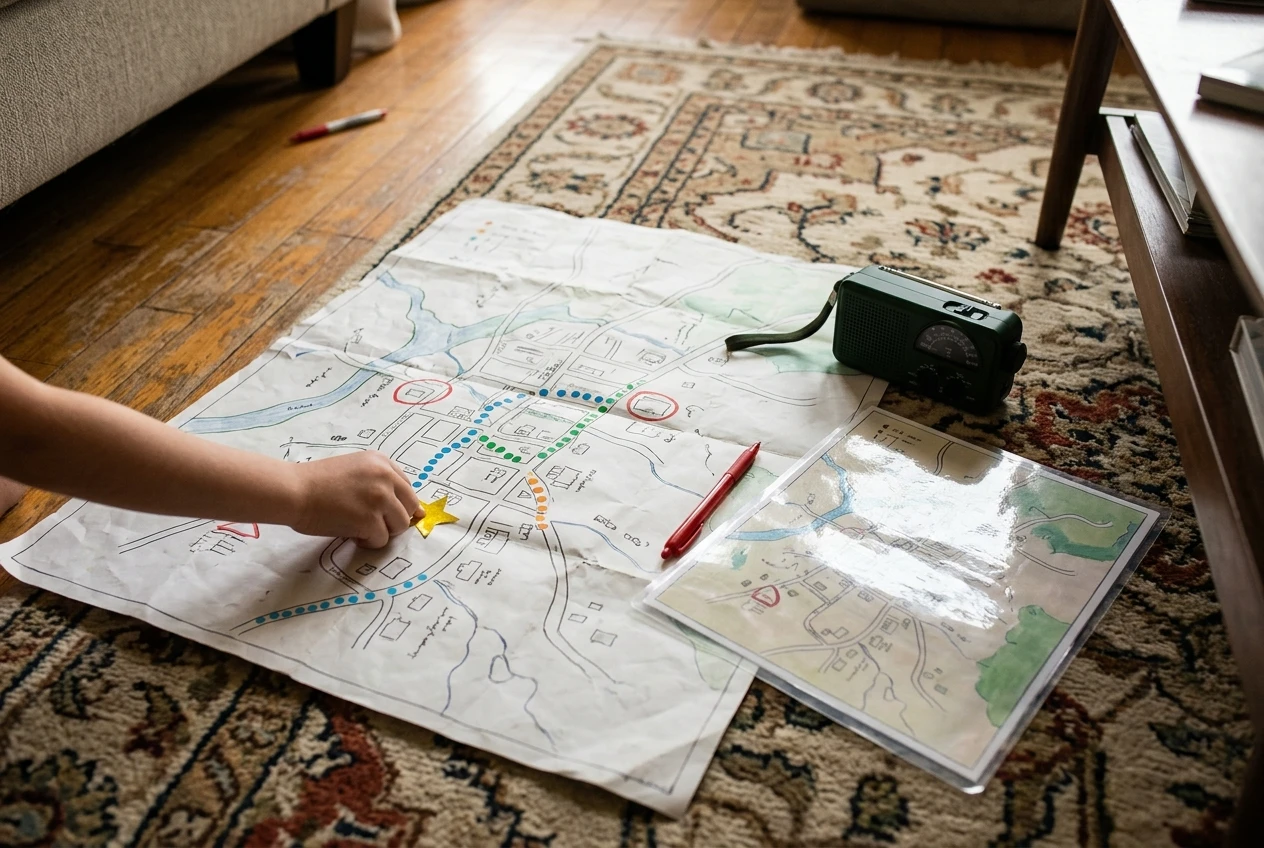
Paper maps. A printed map of your town and surrounding area still works with no signal and no battery. Mark your three meeting spots and your evacuation routes on it with a pen, use stickers or something else memorable for your kids to remember their path. You can make a map that the kids can remember, make copies for each and laminate them. They can be kept in the backpack.
*A fun game is to make a treasure hunt along the various routes. Let them find landmarks, hide trinkets along the way, place stickers like bread crumbs to follow. Do whatever you can to make the routes memorable.
Look at what you already own before you buy anything. A spare phone charger, an old radio, or a road atlas in the car may already do the job.
Practice ‘the plan’ without scaring the kids
A plan you have only read about is hard to follow under stress. A short practice run once a season at least, tied to something familiar such as the clocks changing, builds the habit without much effort. Even better, talk walks regularly along the routes. Make them a part of your everyday lives.

Keep it light and matter of fact. You might turn it into a game: “Let’s see who remembers the meeting spot,” or “Who can say Aunt Rosa’s number from memory?” Walk to the neighborhood spot together and talk about what you are doing in everyday language, as you would when teaching a fire drill.
Each practice is a chance to update things. Check that the phone numbers are still right, that the cards fit in new backpacks, and that the battery bank is charged. Children usually feel more secure when they know what to do, and a calm tone from you helps that along.
Keep your plan with the rest of your kit and link it to your 72-hour bag
Once the cards are filled out and the meeting spots chosen, put a copy of the plan where you can grab it fast. Consider a folder or zip bag that holds the family sheet, spare wallet cards, and your marked map, and store it with the rest of your emergency supplies.
If you already have a bag packed, this folder belongs inside it. If you are still building one, our guide on how to make a 72-hour bug out bag with things you already own walks through it without a big spending list. Keeping the plan and the bag together means one less thing to hunt for on a stressful day.
Consider printing the wallet card from this article and filling it out with your family this weekend, then pair it with your 72-hour bag so everything lives in one place. One evening of writing things down now will make any future emergency feel much more manageable.
Bonus Points for Push to Talk Radios
If you have a little extra cash, consider push to talk radios. There are two brands that are in the forefront of this type of communication. Rapid Radios and Poclink Radios are like the old Nextel phones. They run on phone networks. You can talk to people all over the country. They are like walkie-talkies that can work over hundreds of miles instead of dozens.
